AI-generated concept visualization
TATTOO BLACK · HURGHADA

Egyptian tattoo symbols: meaning & design

Exploring Anubis, scarabs and lotus flowers thoughtfully.

An Egyptian motif can be visually striking, but it pays to ask what it represents, how the elements work together and whether the details will remain clear.

Anubis: a striking figure with historical context

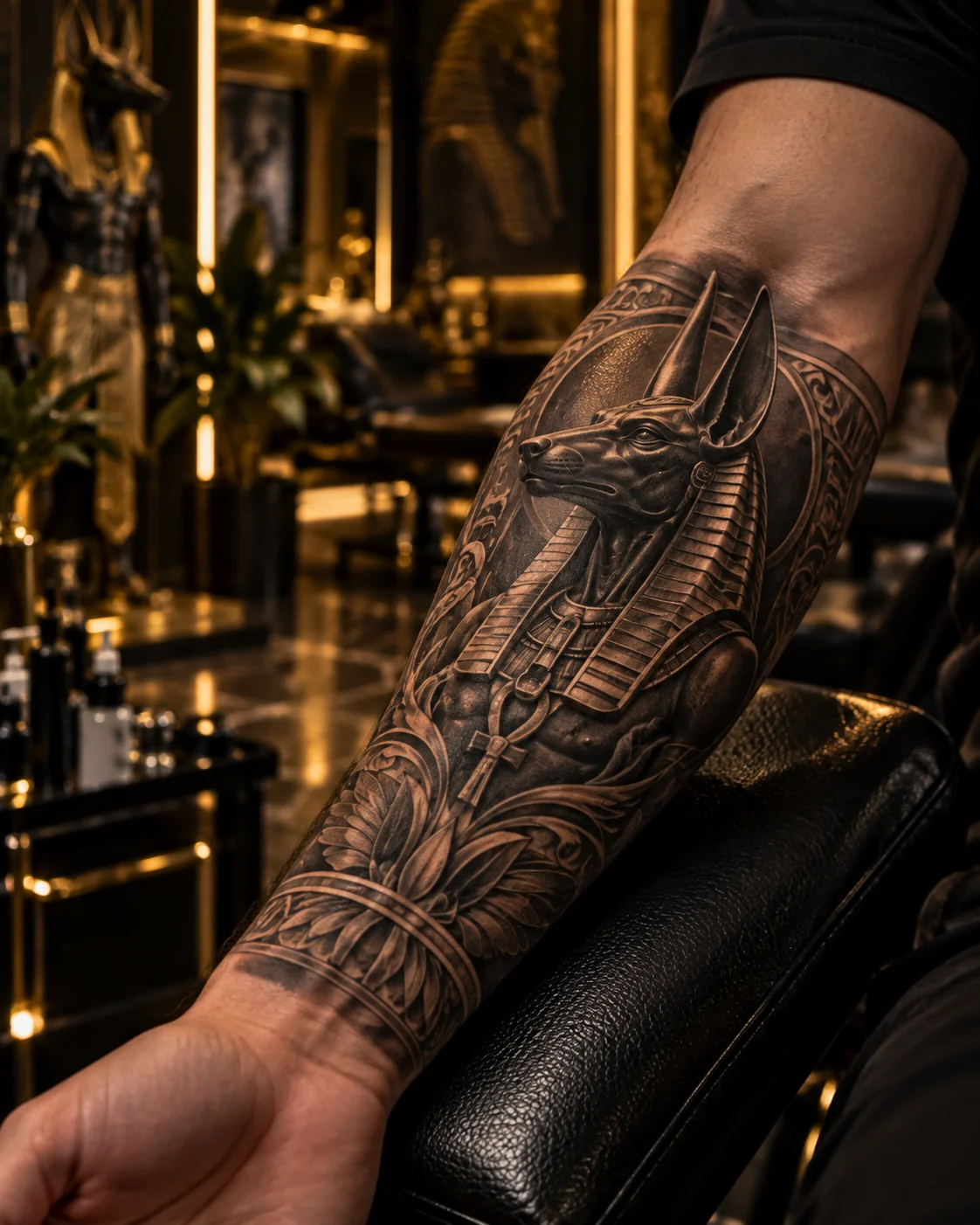
In ancient Egyptian religion, Anubis is associated with funerary rites and protection of the dead. The jackal-headed figure is instantly recognizable. Decide whether you want to reference historical imagery or simply use the graphic silhouette. Invented hieroglyphs may have unintended or no meaning, so avoid claiming a translation without checking it carefully.

Scarabs, lotus flowers and geometry

The scarab is associated, among other things, with renewal. Lotus imagery appears in different contexts across Egyptian art; interpretations depend on the period and representation. Simple outlines can suit small designs, whereas detailed ornamentation requires more space.

Composition beats collecting symbols

Choose a primary visual focus. Supporting patterns can flow around the arm or shoulder, while too many equal-sized symbols can compete. Discuss contrast, negative space and scale with the artist.

Four questions before deciding

  • What does this motif mean to me personally?
  • Have I researched its cultural and historical background?
  • Is the detail appropriate for the chosen size and placement?
  • Do I have a clear reference rather than a blurry screenshot?

The illustrated Anubis tattoo is an AI-generated concept, not work performed by the studio. Request a custom, technically feasible drawing before booking.

Image disclosure: all studio and tattoo images are AI-generated concepts, not actual photos or client work.

Discuss your tattoo idea

Send your reference, preferred size and dates. An inquiry is not a confirmed booking.

Send an inquiry ↗
In-depth guidance and practical examples

Explore the subject in depth with realistic examples, decisions to make and important limitations.

A symbol needs context

Ancient Egyptian art carries varied meanings across periods and contexts. A modern Egyptian-inspired composition is different from a historically exact inscription. Do not assume that an AI-generated row of glyphs correctly translates a name.

Anubis as a design

Anubis is commonly represented as a jackal or jackal-headed figure and has associations with burial and protection of the dead. A clear head silhouette and enough room for the neck and decorative details are important visually. Decide whether any combined imagery is intended as a historical reference or modern fantasy.

Lotus, scarab and ankh

The lotus can work as a symmetric central motif; scarabs need adequate space for body and wing detail, while the ankh has a recognizable outline. Verify the meanings of the precise symbols with reputable museum or academic resources rather than copying unsupported captions.

Treat hieroglyphs carefully

Modern names do not necessarily convert directly into ancient Egyptian writing. A qualified specialist should check any important inscription before it becomes permanent. The design must also leave enough space between glyphs to remain legible.

Keep a clear composition

Trying to fit a pharaoh, Anubis, pyramids, an eye and several lines of text into a tiny space usually compromises readability. Choose one strong focal point, select a few supporting shapes and inspect the stencil at actual size on the intended body area.